
Bible Passage: Ephesians 1:1–10
Big Idea: Recognizing we are chosen by grace enables us to live authentically and with purpose, forging strong relationships grounded in faith and love.
Introduction to Ephesians
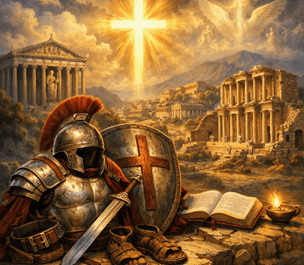
Ephesus was located near the mouth of the Cayster River on the west coast of Asia Minor and served as the capital of the Roman province of Asia. Home to more than 300,000 people, it was a wealthy trade center known for its accessible harbor, cultural sophistication, prosperity, and pagan worship. The city was also a major religious hub, built near an ancient shrine to an Anatolian fertility goddess. Its temple to Diana was counted among the Seven Wonders of the World, and Paul’s gospel ministry challenged the power and influence of that cult (Acts 19:23-41).
Paul wrote Ephesians while imprisoned, though scholars differ on the location. Some place the imprisonment in Caesarea around AD 57–59 (Acts 24:22), while others place it in Rome around AD 60–62 (Acts 28:30). He likely wrote Colossians, Philemon, and Philippians during the same period. Tradition identifies Rome around AD 60–61 as the setting, when Paul was under house arrest in a guarded rented house (Acts 28:30).
Many scholars believe Ephesians was intended for more than the believers in Ephesus. The reference to Ephesus occurs only in verse 1, and the phrase “to the saints in Ephesus” is missing from the two oldest Greek manuscripts. For this reason, the letter was likely circulated among churches throughout Asia Minor. As each congregation received it, they could hear its message as directly relevant to them—a broad purpose that continues to strengthen its value for Christians today.
Opening Thoughts
Each morning, we should pause and count our blessings. As believers, we are richly blessed in Christ. Paul wrote to the Ephesians to teach them how to live out their salvation, but before addressing unity and Christian conduct, he first reminded them of the extraordinary blessings they had received in Christ. Knowing what we have in Him prepares us to live in a way that reflects who we are in Him.
We are often inspired by people who set a clear goal and pursue it with a thoughtful plan. Their choices seem tied to that purpose, and we admire their focus and determination. Yet we can sometimes forget that God also has a purpose for His creation, and He is faithfully carrying it forward. His work is never random; He is moving all things toward His intended end. Paul shows us that believers share in this gracious purpose because God chose to bring salvation through His Son.
As we begin Paul’s letter to the Ephesians, we are invited to pause and marvel at God’s grace. Ephesians 1:1-10 reveals the abundance of His blessings: through Jesus Christ, we have been adopted into God’s family, redeemed by His blood, and forgiven of our sins. These gifts are not earned; they flow from God’s abundant grace and His desire to draw us near. Paul presents a God who is actively accomplishing His perfect plan, bringing all things together under the lordship of Christ.
Identity Initiated by God
1 Paul, an apostle of Christ Jesus by the will of God, To the saints who are in Ephesus, and are faithful in Christ Jesus: 2 Grace to you and peace from God our Father and the Lord Jesus Christ. 3 Blessed be the God and Father of our Lord Jesus Christ, who has blessed us in Christ with every spiritual blessing in the heavenly,
Paul begins Ephesians by lifting believers’ eyes beyond their circumstances. Though they live in a broken world marked by trouble, need, struggle, and sin, their truest identity and richest resources are found in Christ. God has already given His people every spiritual blessing, and that heavenly reality should shape how they think, live, and respond each day.
Paul introduces himself as “an apostle of Christ Jesus by God’s will.” His authority did not come from his résumé, reputation, or religious background. It came from Christ’s calling and God’s will.
That reminder is important for every believer: serving Christ is not about building a platform for ourselves, but about faithfully stewarding what God has entrusted to us.
Paul calls the believers “faithful saints in Christ Jesus.” That may sound like a title reserved for spiritual elites, but Scripture uses it for all who belong to Christ.
- Saints are people God has set apart and made holy in Christ.
- Faithful believers are those who have trusted Jesus as Lord and Savior.
- Our standing rests on Christ’s righteousness, not personal perfection or special status.
Paul’s greeting is more than a polite opening. Grace points to God’s undeserved favor, and peace points to the wholeness and reconciliation God gives. Both come from God the Father and the Lord Jesus Christ.
Before Paul tells believers how they should live, he reminds them of what God has already given them. Christian obedience grows out of received grace, not spiritual insecurity.
Paul says God “has blessed us” with every spiritual blessing in the heavenly places in Christ. These blessings are not merely future rewards for good performance; they have already been given to believers through union with Christ.
Paul will identify these blessings throughout the passage: election, adoption, redemption, forgiveness, inheritance, the Spirit’s seal, and hope in God’s final plan.
Believers need not live spiritually empty or insecure. Although we live on earth, our lives are anchored “in the heavens” in Christ. Our identity, strength, and perspective do not have to rise and fall with circumstances, because they rest in our position in Him.
God intends this heavenly reality to shape our earthly conduct. Since many visible struggles have spiritual roots, we must learn to live from what He has already accomplished in Christ.
Intentionally Chosen in Love
4 even as he chose us in him before the foundation of the world, that we should be holy and blameless before him. In love 5 he predestined us for adoption to himself as sons through Jesus Christ, according to the purpose of his will, 6 to the praise of his glorious grace, with which he has blessed us in the Beloved.
Paul continues with worship, blessing God for the grace He has poured out in Christ. In the New Testament, the word translated “blessed” (eulogētos) is used only of God because He alone deserves our highest praise. We are blessed when we receive what God gives; God is blessed when we praise Him for giving freely.
Paul especially praises Him as “the God and Father of our Lord Jesus Christ” because Jesus reveals the Father perfectly. Every spiritual blessing comes through our relationship with God in Christ, who reigns at the Father’s right hand in heaven.
Think about a time when you were chosen for something meaningful—an honor, responsibility, or opportunity you did not want to take lightly. Being chosen on purpose is encouraging. Yet Paul points to something far greater: believers can rejoice because God chose them in Christ before the foundation of the world.
When Paul says God “chose us in him,” the words “in him” are essential. God’s choice is centered in Jesus, not separated from Him. Ephesians presents the people of God—the church, the body of Christ—as formed in the “Beloved One” to reflect His character and His rule in the world.
Being chosen by God should not make believers proud or passive. It should lead us to worship, humility, confidence, and faithful service. God made His choice before we had accomplished anything, before we had failed in any way, and even before we existed. Salvation therefore rests on grace, not merit, which leaves no room for boasting and gives deep assurance.
God did not choose believers merely to rescue them from judgment. He chose us “to be holy and blameless before him.” We belong to God and are being shaped by His character. Grace does not leave us unchanged; it transforms us so our lives increasingly reflect Christ.
Being chosen by God comes with both privilege and responsibility:
- Privilege: believers are loved, chosen, and adopted by God.
- Responsibility: believers are called to live in a way that reflects God’s holiness.
- Assurance: holiness is not produced to earn God’s choice; it is grown in us because He has already chosen us.
Paul then uses adoption to describe God’s saving purpose. In the ancient Roman world, adoption changed a person’s identity, allegiance, inheritance, and place of belonging. An adopted child came under a new father’s authority and received the privileges of that family. In Christ, God brings us into His family, gives us a new identity, and invites us to live under His loving care.
Salvation is deeply personal, but it is not self-centered. God brings us to Himself “for himself,” according to the good pleasure of His will. We do not simply receive blessings from God; we belong to God. Through Jesus, the true Son, we receive the privilege of being His children and the calling to live as members of His family.
Imagine a child being welcomed into a family through adoption. That child does not have to earn the family name, a seat at the table, or the promise of belonging. Those gifts are given because the parent chooses to love and welcome the child. In a far greater way, God chose us in Christ and brought us into His family—not because we earned it, but because His grace reached us first.
Ephesians 1:6 shows where all of this is heading: “to the praise of his glorious grace.” God’s work in election, predestination, adoption, calling, and redemption displays His grace so it will be seen, celebrated, and praised. The goal is not to win a theological debate, but to worship the God whose grace is glorious, generous, and freely given in the “Beloved One”.
This perspective helps us handle difficult doctrines with humility. God’s sovereignty and human responsibility may stretch our understanding, but Scripture holds both together. We respond with faith, repentance, obedience, and worship, trusting that God’s wisdom is greater than ours.
Incredible Richness of Redemption
7 In him we have redemption through his blood, the forgiveness of our trespasses, according to the riches of his grace, 8 which he lavished upon us, in all wisdom and insight 9 making known to us the mystery of his will, according to his purpose, which he set forth in Christ 10 as a plan for the fullness of time, to unite all things in Christ, things in heaven and things on earth in him.
Ephesians 1:7–10 carries us from the personal gift of forgiveness to God’s sweeping purpose for all creation. Paul wants believers to see that redemption is more than the removal of guilt. It is God’s gracious rescue of sinners from bondage through the blood of Jesus Christ.
Because all have sinned, all are bound by sin’s penalty and power. Yet in Christ, God gives what sin could never offer: freedom, forgiveness, wisdom, adoption, inheritance, and hope.
In the ancient world, redemption meant paying a price to secure a slave’s freedom. Paul uses that image to explain what Christ has done for believers. Jesus paid the price sinners could never pay, satisfying sin’s debt and restoring believers to fellowship with God.
Redemption is the language of liberation: to buy back, rescue, or set free by paying a price. Scripture teaches that sin is not merely a wrong action but an enslaving power. Apart from Christ, people remain under sin’s guilt, penalty, and brokenness. The good news of Ephesians 1:7 is that believers are redeemed “through his blood.”
Christ’s blood refers to His sacrificial death on the cross. Redemption is not achieved by effort, earned by good behavior, or purchased through religious performance. It was accomplished by Christ alone. Therefore, the believer’s freedom rests on His finished work, not personal achievement.
Paul immediately links redemption with “the forgiveness of sins.” Because Christ has paid the debt in full, God no longer counts the believer’s sin against them. This gives assurance to those burdened by guilt, shame, or doubt: acceptance with God rests on the sufficiency of Christ’s sacrifice, not the strength of our performance.
Forgiveness also restores relationship. Sin separated humanity from God, but through Christ believers are brought near. We may approach Him not as condemned slaves, but as adopted children welcomed by grace.
Paul says redemption comes “according to the riches of his grace.” Grace is God’s undeserved favor—not a reluctant or limited gift, but an overflowing expression of His character. God redeems not because sinners are worthy, but because He is gracious, merciful, and faithful to His purpose.
- Grace protects us from pride: salvation is not earned, so there is no room for boasting.
- Grace protects us from despair: God’s mercy is greater than our sin.
- Grace gives us confidence: our hope rests in God’s abundant goodness, not our own strength
God also blesses believers with wisdom and understanding. Wisdom is the ability to see life in light of God’s truth—to understand realities such as God and humanity, time and eternity, good and evil, life and death, sin and salvation.
In Ephesians 1:9, Paul says God has made known “the mystery of his will.” In Scripture, a mystery is not unknowable; it is something God once kept hidden but has now revealed. That plan centers on Jesus Christ. God’s purpose is not random, divided, or uncertain; He is working all things according to His good pleasure.
Believers, then, are part of something far greater than individual salvation. Personal redemption is woven into God’s eternal purpose for creation, giving the Christian life lasting meaning and direction.
Eph 1:10 reveals the fullness of God’s purpose: He will unite all things in Christ, in heaven and on earth. Though the world appears broken, divided, and disordered, God’s final word is restoration under the lordship of Jesus.
The church’s hope is the return of Christ. One day, heaven and earth will be united in Him, creation will be restored, and Christ will be openly acknowledged as Lord overall. Because God’s plan ends in victory, believers can live with confidence rather than fear.
Because believers have been redeemed by Christ, we should no longer live as though we are still enslaved to sin, guilt, or fear. Redemption calls us to rejoice in forgiveness, rest in grace, seek wisdom from God’s Word, and live with hope in Christ’s coming victory.
Application
Ephesians 1:1–10 is not merely a doctrine to study; it is a truth to stand on. Before Paul tells believers what to do, he reminds them who they are. Before he gives commands, he announces grace. The Christian life does not begin with striving for God’s acceptance, but with receiving what God has already given in Christ. We obey not to become blessed, chosen, adopted, redeemed, or forgiven, but because in Jesus these gifts already belong to us.
Grace grounds our identity. So do not live for acceptance when Christ has already made you accepted. Do not live as an orphan when the Father has adopted you. Do not live as a slave when the Son has redeemed you. Do not live under shame when your sins have been forgiven. And do not live without hope when God has promised to unite all things in Christ. Receive what God has given, stand in who you are, and let your life become praise to His glorious grace.
Discussion Questions
- What does Ephesians 1:1-10 teach about the concept of being chosen by God?
- How does Paul describe the relationship between grace and our identity in Christ in this passage?
- What are the spiritual blessings mentioned in Ephesians 1:1-10?
- How can knowing you are chosen by God help you overcome feelings of self-doubt?
- What are some practical steps you can take to live authentically as a chosen child of God?
©2026 CrossSites Bible Study, St. Augustine, Fl 32092
{Unless otherwise indicated, Scripture verses are taken from the English Standard Version}


Leave a comment