
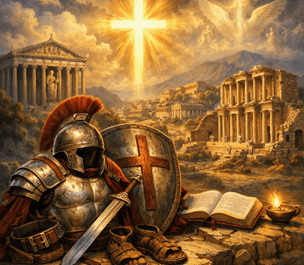
Bible Passage: Ephesians 1:11-23
Big Idea: Understanding the incredible richness of God’s grace empowers us to live confidently and purposefully, reliant on the spiritual inheritance and power we have in Christ.
Opening Thoughts
In Ephesians 1:11-23, Paul teaches that believers receive an inheritance in Christ not through merit or background, but through God’s gracious choice and adoption. This grace unites Jews and Gentiles into one family under God’s sovereign love. When Gentile believers heard and believed the gospel, they too were sealed by the Holy Spirit, marked as belonging to the same Lord, future, and promise. Paul then prays that this grace-formed community would grow in wisdom and revelation, seeing the hope of their calling, the riches of their shared inheritance, and God’s immeasurable power at work among them. He concludes by pointing to Christ, exalted overall and Head of the church. As His body, the church is filled with His life, empowered by His presence, and united under His authority.
Understanding Our Inheritance
11 In him we have obtained an inheritance, having been predestined according to the purpose of him who works all things according to the counsel of his will, 12 so that we who were the first to hope in Christ might be to the praise of his glory. In him you also, when you heard the word of truth, the gospel of your salvation, and believed in him, were sealed with the promised Holy Spirit, 14 who is the guarantee of our inheritance until we acquire possession of it, to the praise of his glory.
Many people spend their lives trying to answer one question: Who am I? Some look for identity in achievement, reputation, family history, career, approval, possessions, failure, or the opinions of others. But every identity built on something unstable eventually becomes a burden. If achievement defines us, then failure destroys us. If approval defines us, then criticism wounds us deeply. If the past defines us, then shame becomes our name.
Ephesians 1:11–14, Paul does not tell believers to invent themselves, prove themselves, or rename themselves. He tells them what God has done for them in Christ. Believers have received an inheritance, heard and believed the gospel, and been sealed with the promised Holy Spirit. In other words, Christian identity is not self-made; it is grace-given.
Paul says that believers were included in Christ when they heard the word of truth, the gospel of salvation, and believed in Him. That phrase “in Christ” is one of the richest identities a Christian can have. It means the believer is no longer spiritually outside, no longer alienated from God, and no longer defined apart from Jesus. By grace, the believer is brought into union with Christ.
The gospel changes a believer’s identity at the deepest level. It tells the truth about sin without leaving us in despair, and it tells the truth about grace without minimizing our need for salvation. In Christ, the guilty are forgiven, the lost are found, the far-off are brought near, and the spiritually dead are made alive. Grace does not merely improve the old identity; grace gives a new one.
Paul says that believers are sealed with the promised Holy Spirit. A seal marked ownership, authenticity, and security. God has placed His Spirit upon His people as the sign that they belong to Him. This means Christian identity is not fragile, temporary, or dependent on emotional strength. The Spirit Himself testifies that believers are God’s own possession.
The Holy Spirit is the guarantee of our inheritance until we acquire possession of it. That means grace does not only give believers a new past and a new present; grace gives them a future. The Christian is not defined by what has been lost, broken, or left behind. The Christian is an heir of God’s promise in Christ.
This future inheritance changes how believers endure the present. Suffering is real, but it is not final. Weakness is real, but it is not the believer’s destiny. Waiting is real, but it is filled with hope because the Spirit is the guarantee that God will finish what He began. Grace teaches believers to say, “I am not only what I have been through. I am becoming what God has promised.”
Paul repeats that all of this is “to the praise of His glory.” Grace grants identity so that God receives glory. The believer’s new identity is not a private badge of self-esteem; it is a testimony to the mercy, wisdom, and faithfulness of God. When God takes sinners and calls them saints, when He takes the ashamed and calls them beloved, when He takes the lost and calls them His own, His glory is put on display.
The believer’s grace-given identity does not make them proud; it makes them worshipful. We did not name ourselves. We did not save ourselves. We did not secure ourselves. God has done this in Christ by the Spirit. Therefore, the call is not to perform for identity, but to receive identity by faith and then live as those who belong to God.
Therefore, the Christian life is not about trying to manufacture worth but learning to live from the worth grace has already given. We obey not to earn an identity, but because we have received one. We serve not to prove we matter, but because grace has made us God’s own. We worship not to escape insecurity, but because God has anchored us in Christ.
Seeking Spiritual Insight
15 For this reason, because I have heard of your faith in the Lord Jesus and your love toward all the saints, 16 I do not cease to give thanks for you, remembering you in my prayers, 17 that the God of our Lord Jesus Christ, the Father of glory, may give you the Spirit of wisdom and of revelation in the knowledge of him, 18 having the eyes of your hearts enlightened, that you may know what is the hope to which he has called you, what are the riches of his glorious inheritance in the saints, 19 and what is the immeasurable greatness of his power toward us who believe, according to the working of his great might
Paul’s prayer in Ephesians 1 is for believers whose faith in the Lord Jesus and love for the saints were already clear. He had heard of their walk with Christ and rejoiced in the evidence of God’s grace among them. Their lives displayed the two marks of genuine faith: trust in Jesus and love for God’s people. Yet Paul continued to pray for them because he knew that salvation is not the end of spiritual growth. The Christian life is a lifelong journey of knowing God more deeply, seeing life more clearly, and living more faithfully through the power of the Holy Spirit. That is why Paul does not first ask for easier circumstances, greater success, or material blessing. He asks God to give them wisdom and revelation in the knowledge of Him. Paul’s desire is that believers would not merely learn more facts about God, but truly know God with awakened hearts, Spirit-taught minds, and lives shaped by holy discernment.
Paul asks God to give believers “a spirit of wisdom and revelation in the knowledge of Him.” This is where spiritual insight begins. Paul is not praying for mere intelligence, religious curiosity, or clever thinking. He is asking for the Spirit to work within believers so they may know God truly, personally, and reverently. Knowing about God is not the same as knowing God. A person may understand biblical language, theology, and church tradition yet remain distant from the living God. Paul wants more than informed minds; he wants transformed hearts. He prays that truth would lead to worship, doctrine to devotion, and knowledge to obedience. Wisdom helps us live according to what God has revealed, while revelation is God making Himself and His truth known by the Spirit. Together, they move us beyond surface-level religion and teach us to ask: What is God showing me? What is He correcting? What is He calling me to trust and obey? True spiritual insight humbles us, deepens our dependence, and draws us nearer to God. The more clearly we see Him, the more deeply we worship Him.
Paul prays that “the eyes of your hearts” would be enlightened, reminding us that there is a kind of sight physical eyes cannot provide. We may look at our lives and see only problems, pressure, delay, disappointment, or weakness. But when God opens the heart, we begin to perceive what is unseen: His purpose, presence, promises, and power.
This is why prayer is essential to spiritual growth. Teaching and information are not enough by themselves. We need the Spirit of God to illuminate the Word of God so the people of God can live for the glory of God. Paul teaches, but he also prays, because only God can open the heart to receive what the mind has heard. Many believers do not need a new blessing as much as opened eyes to recognize the blessings already theirs in Christ. Paul is not asking God to give the Ephesians something outside of Christ; he is asking that they understand what they already possess because they belong to Christ. Spiritual insight keeps us from living beneath our inheritance.
When God opens the eyes of the heart, believers begin to see three life-shaping realities in Christ: the hope of His calling, the riches of His glorious inheritance in the saints, and the immeasurable greatness of His power toward those who believe. These are not separate blessings for different kinds of Christians; they are essential truths every believer needs to see clearly.
First, spiritual insight gives us hope. Biblical hope is not wishful thinking; it is confident expectation grounded in God’s character and promises. When our hearts are dim, we may mistake hardship for abandonment, waiting for rejection, or weakness for failure. But the Spirit helps us see our lives in light of God’s calling. We are not aimless. We are called by God, sustained by grace, and moving toward a future secured in Christ.
Second, spiritual insight shows us the riches of God’s inheritance in the saints. God’s people are precious to Him. We often measure worth by achievement, approval, possessions, influence, or usefulness, but God measures His people by grace. When our hearts are enlightened, we begin to see ourselves and others as redeemed, beloved, and treasured in Christ.
Third, spiritual insight teaches us to rely on God’s immeasurable power. The Christian life cannot be lived by human resolve alone. We need more than good intentions, stronger willpower, or better plans. We need God’s power at work in us—power that saves, strengthens, transforms, sustains, and keeps us.
This clearer vision changes how we live. Hope steadies us in uncertainty. Inheritance humbles us and teaches us to value what God values. Power frees us from self-reliance and draws us into dependence on the Lord. Spiritual insight does more than inform the mind; it reorders the heart around what is eternally true in Christ.
Paul’s prayer summons the church to seek spiritual insight. We need to know God more deeply, have the eyes of our hearts opened, and grasp the hope of His calling, the riches of His inheritance, and the greatness of His power. These are not optional blessings for a few mature believers; they are essential gifts for every Christian seeking to live faithfully in a confusing, weary, and distracted world.
Experiencing Christ’s Victory
20 that he worked in Christ when he raised him from the dead and seated him at his right hand in the heavenly places, 21 far above all rule and authority and power and dominion, and above every name that is named, not only in this age but also in the one to come. 22 And he put all things under his feet and gave him as head over all things to the church, 23 which is his body, the fullness of him who fills all in all.
Paul wants the church to grasp the greatness of God’s power at work in believers, and he points to Christ as its clearest display. God raised Jesus, seated Him at His right hand, placed all things under His feet, and made Him head over the church. Because of this, the Christian life is not a fight toward uncertain victory but a life flowing from Christ’s finished triumph. His victory strengthens the weary, encourages the fearful, gives hope to the suffering, and gives purpose to the church. Ephesians 1:20–23 shows us how to live in that victory daily.
God displayed His power by raising Christ from the dead. The resurrection declares that death, sin, and darkness do not have the final word—Christ does. We experience His victory when we stop measuring life only by what we see and trust the power revealed in the empty tomb. The God who raised Jesus is still strengthening His people to resist sin, endure trials, forgive wounds, obey at a cost, and hope when the future feels uncertain. What seems final to us is not final to Him; Christ’s victory teaches us to face hardship with resurrection confidence.
God not only raised Christ; He seated Him at His right hand in the heavenly places. Jesus stands above every rule, authority, power, dominion, and name. His victory is not partial or temporary; He reigns now and forever. This gives believers peace. We do not deny trouble, opposition, injustice, weakness, or uncertainty, but we confess a greater truth: Jesus is Lord over every power that threatens His people. To experience His victory is to place our fears, decisions, families, future, and mission under His authority. True rest comes from knowing Christ is exalted above all we cannot control, so we can bow in worship and live with confidence.
Paul moves from Christ’s rule over all things to His union with the church. God placed everything beneath Christ’s feet and gave Him as head to the church, His body and fullness. The church is not merely an organization; it is the living body of the victorious Christ. Together, we experience His victory as He leads, nourishes, corrects, and sends His people. Through worship, unity, holiness, compassion, witness, and service, the church makes His life visible in the world. Christ’s victory is displayed when we live not as disconnected individuals, but as His body under His headship.
Christ’s victory is not only truth to believe; it is life to experience. So we trust His resurrection power, rest under His supreme authority, and live as His body in the world. In Him, we do not fight toward an uncertain outcome; we live from a victory already secured by the risen Lord, who reigns, fills His church, and will place all things under His feet.
Application
Ephesians 1:11–23 calls us to live from what God has given us in Christ: an inheritance, the Spirit’s seal, hope, and union with the victorious Lord. These truths must shape our confidence and obedience.
First, receive your identity by grace, not performance. Because we belong to God, we can serve without seeking applause, repent without despair, and face weakness without losing our worth.
Second, pray for opened eyes, not merely better circumstances. Ask God to reveal the hope, inheritance, and power already yours in Christ: “Lord, help me see what is true in Christ.”
Third, live under Christ’s victory and authority. Fear, sin, discouragement, and cultural pressure do not have the final word because Jesus is risen, reigning, and present with His church.
Encourage one another, honor God’s people, serve humbly, and value the church. Sealed by the Spirit and joined to the risen Christ, we can worship, love, serve, and point the world to God’s glory.
Discussion Questions
- What is the main message of Ephesians 1:11-23 regarding our identity in Christ?
- How does Paul describe the role of the Holy Spirit in relation to our inheritance in Christ?
- How can understanding our spiritual inheritance empower us to face daily challenges?
- In what ways can we encourage one another to live confidently under Christ’s authority?
- What does it mean to be ‘in Christ’?


Leave a comment